

Hotel investments
One hotel. Four operating models.
A hotel is both a property and a business. The operating agreement determines who runs it, who bears the risk in a weak year and who benefits from a strong one. For each hotel, we choose the structure that fits the location, the stage of the market cycle and the capital invested. We use all four models in our own portfolio.

Which operating model suits the hotel?
We start with the property when deciding whether to lease the hotel to an operator, appoint a manager or run it ourselves. How dependable is demand, and what earnings can the hotel sustain over time?
- Location and demand
- Business travellers, conference delegates and leisure guests book at different times. The broader the guest mix and the more resilient room rates are, the more willing we are to take on the operating risk ourselves.
- Scope to improve trading
- Where a different room mix, stronger distribution or repositioning could improve earnings, we look at who captures the gain. Under a fixed-rent lease, it generally goes to the tenant.
- Operator and capital
- We compare three options on the same basis: leasing the hotel to an operator, appointing a manager or running the hotel ourselves. What remains after fees, reserves and debt service? How far could earnings fall over the planned holding period before the property or its financing came under pressure?
Four operating models compared
Owner’s income
Lease models
The tenant runs the hotel and bears the trading risk
Fixed-rent lease
Contractual rent, usually linked to a price index
Lease with variable rent
Rent linked to revenue or profit, often with an agreed minimum
Owner’s hotel business
The owner receives the trading profits and bears any losses
Management agreement
Operating earnings after management fees
Owner-operated franchise
Operating earnings after brand and distribution fees
How the contract shapes the owner’s income
We model the same hotel under three different contracts. In a normal year, the owner’s income is broadly similar under all three. As revenue rises, the contracts determine who benefits. In a crisis, the tenant’s ability to pay the agreed rent determines how much rent the owner receives.
The owner’s income under each contract
€m per year (illustrative example)
Normal year
- Fixed-rent lease
- 2.50
- Lease with variable rent
- 2.50
- Management agreement
- 2.88
Compare all scenarios
| Contract | Normal year | Strong year | 2020-style crisis |
|---|---|---|---|
| Fixed-rent lease | 2.50 | 2.50 | 1.67 |
| Lease with variable rent | 2.50 | 2.88 | 1.33 |
| Management agreement | 2.88 | 3.65 | 0.83 |
| GOP | 3.50 | 4.40 | 0.10 |
GOP is the hotel’s gross operating profit before rent or management fees.
Source: Evientro, simplified example. Indicative terms: Horwath HTL · HVS
How the owner’s income changes with hotel revenue
Change the hotel’s annual revenue or select a scenario to see the owner’s income under each contract. The marker shows what the hotel earns before rent or management fees.
Owner’s income · €m per year
Dashed marker: the hotel’s gross operating profit (GOP).
Model assumptions
Simplified example, not a forecast or data for a particular property. Assumptions: normal-year revenue €10.0m; gross operating profit (GOP) equals 60% of revenue less €2.5m in fixed costs. Fixed rent €2.5m. Lease with variable rent: the higher of €2.0m and 25% of revenue. Management agreement: base fee of 3% of revenue, incentive fee of 10% of operating profit after the base fee, payable only out of the amount above an owner’s priority of €2.5m. Crisis comparable to 2020: revenue down 70%, operating profit close to zero. In our experience, the tenant and owner each absorbed around one third of the rent shortfall in Austria, and public support covered the remaining third. Under the management agreement, the owner receives the public support directly. Figures are before the reserve for renewals, insurance and property tax.
Compare all three curves
- Fixed-rent lease
- Lease with variable rent
- Management agreement
Revenue change from a normal year
Data behind the curves
| Revenue change | Fixed-rent lease | Lease with variable rent | Management agreement |
|---|---|---|---|
| -50% | 2.50 | 2.00 | 0.35 |
| -30% | 2.50 | 2.00 | 1.49 |
| 0% | 2.50 | 2.50 | 2.88 |
| +15% | 2.50 | 2.88 | 3.65 |
| +30% | 2.50 | 3.25 | 4.42 |
The curves model regular trading. The separate crisis scenario includes an assumed rent shortfall and public support.
Source: Evientro, simplified example. Indicative terms: Horwath HTL · HVS
Over a ten-year holding period
Seven normal years, two strong years and one crisis comparable to 2020. Under these assumptions the management agreement generates around 17% more cumulative income for the owner than the fixed-rent lease. In the crisis year itself, the fixed-rent lease delivers more.
| Operating model | Total | Annual average | Compared with a fixed-rent lease |
|---|---|---|---|
| Fixed-rent lease | €24.2m | €2.42m | Baseline |
| Lease with variable rent | €24.6m | €2.46m | +2% |
| Management agreement | €28.3m | €2.83m | +17% |
Ten-year assumptions
Assumptions: normal-year revenue €10.0m, GOP €3.5m; strong-year revenue €11.5m, GOP €4.4m; crisis comparable to 2020: revenue down 70%, operating profit close to zero. Fixed rent €2.5m (25% of normal revenue; according to Horwath HTL, turnover rents typically range from 20% to 30% of net revenue). Lease with variable rent: the higher of €2.0m and 25% of revenue. Management agreement: base fee of 3% of revenue, incentive fee of 10% of operating profit after the base fee, payable only out of the amount above an owner’s priority of €2.5m (indicative fee levels based on HVS). Ten-year calculation: seven normal years, two strong years, one crisis. In the crisis, the tenant and owner each absorb a third of the rent shortfall. Public support covers the remaining third. Under a management agreement, the owner receives the public support directly. Figures are before the reserve for renewals, insurance and property tax. The example uses hypothetical figures.
What we negotiate in the operating agreement
Who runs the hotel, who approves investment and who shares in any additional profit? The type of contract shapes how we address those interests with operators, hotel brands and lenders.
Select an owner’s question
Income and fees
Under management and franchise agreements, we own the operating business. The fees we agree affect how much operating income we retain. Under a lease, our income is the rent.
- Lease
- For a fixed-rent lease, we agree which index to use and any cap or floor on rent adjustments. For variable rent, we agree how it will be calculated. If the lease includes a minimum rent, we specify how the variable component interacts with that minimum.
- Management agreement
- We negotiate the base fee and the manager’s share of operating profit. The base fee is typically linked to revenue. An agreed owner’s priority can set the threshold above which an incentive fee becomes payable.
- Franchise
- We assess brand, marketing, reservation and loyalty programme fees over the full term. Where appropriate, we negotiate introductory discounts for an opening or a change of brand.
Performance and reporting
The reporting we need depends on who runs the hotel and which decisions we take as owner. We use the Uniform System of Accounts for the Lodging Industry (USALI) as a reference when comparing hotel operations.
- Lease
- We agree what information we need to assess rent cover. Where rent varies, we agree the right to receive and verify the revenue or profit figures on which it is based.
- Management agreement
- We agree which operating figures we can inspect and what rights we have to approve the annual budget. A performance test can measure results against both comparable hotels and the agreed budget. We negotiate the measurement period, exclusions, cure provisions and any termination rights.
- Franchise
- Our team is accountable for the budget and operating performance. We seek transparent reporting from the franchisor on bookings through its channels, their associated costs, and compliance with brand standards.
Capital expenditure and upkeep
For guest rooms, building services and public areas, we agree who may commission work, who funds it and who can approve changes to the capital plan.
- Lease
- We allocate responsibility for the building structure, building services and routine upkeep. The tenant regularly sets aside a portion of hotel revenue in a reserve for furniture, fixtures and equipment (FF&E). The tenant uses these funds to refurbish or replace those items.
- Management agreement
- We define our capital budget approval rights and the manager’s spending authority. For central group services, we agree the scope of charges, supporting documentation and any caps.
- Franchise
- Brand standards may require investment at entry and on subsequent refurbishments. We agree the scope, timing and any exceptions, and assess the cost of the brand commitment over its term.
Brand and territorial protection
When we contract directly with a hotel brand, nearby hotels under the same brand may compete for the same guests. We consider the specific brand, the territory and how long any protection would last.
- Lease
- If the tenant operates under a brand, we agree whether a change of brand requires our consent and on what terms the hotel could retain its brand if the tenant changes.
- Management agreement
- Where a hotel group manages the property under its own brand, we align the management and brand commitments. If material to the location, we also negotiate territorial restrictions on additional hotels under the same flag.
- Franchise
- Territorial protection depends on the agreement. We define the brands covered, the area, the duration and any exceptions, so we can assess which additional hotels the franchisor may permit in the territory.
The right brand in the right location.
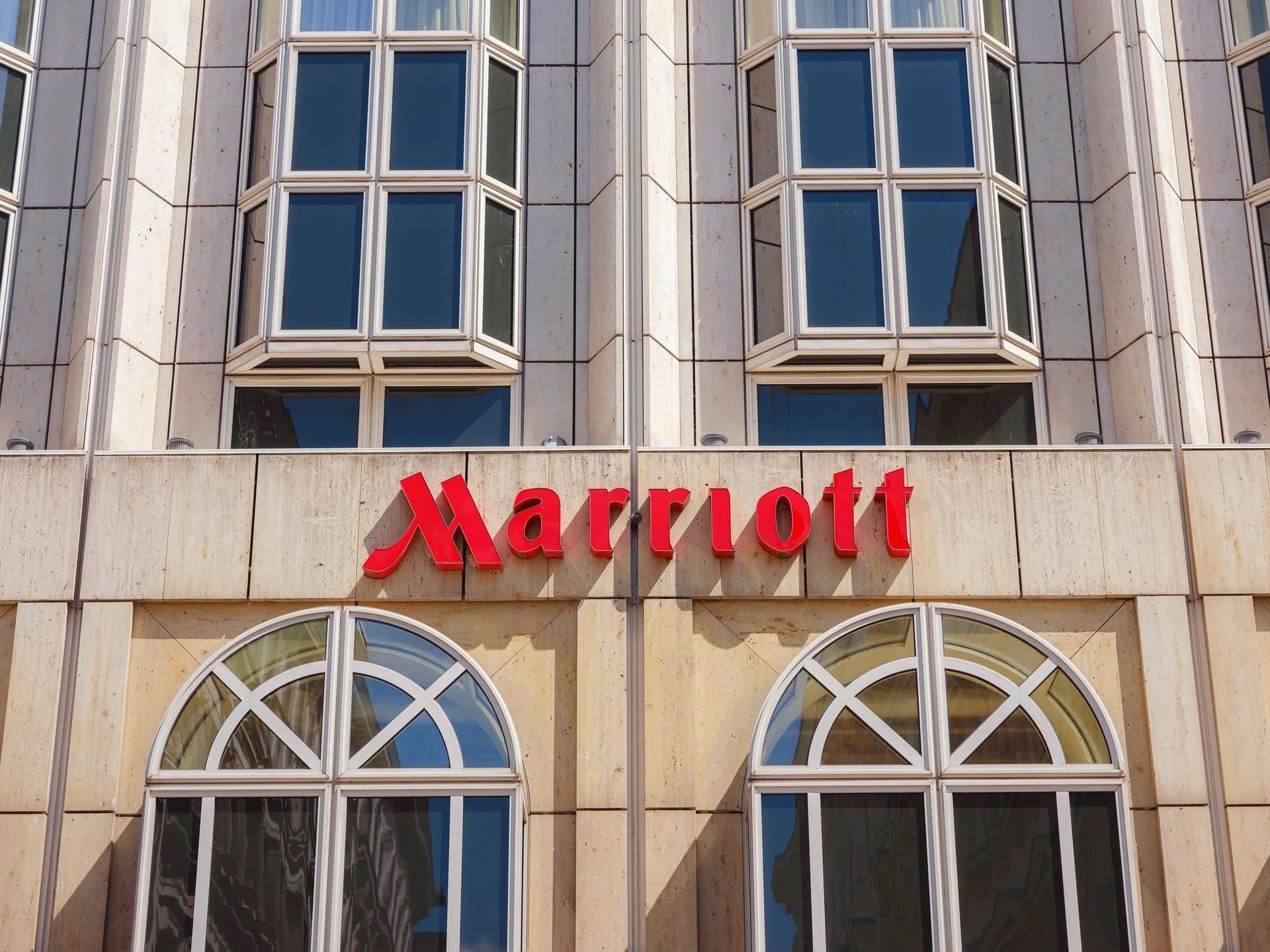
We work exclusively with strong brands. A strong brand brings in guests the hotel cannot reach on its own. Corporate accounts bring in weekday business, the loyalty programme attracts international guests and the global sales team secures group bookings. The brand supports rates in strong years and sustains occupancy in weaker ones.
Choosing a brand takes more than a look through a catalogue. It calls for an understanding of the location, the guests, the building and its neighbours, as well as experience. That judgement is one of our strengths. The right brand adds to the appeal of the location and preserves the hotel’s character.